Friday, 31 December 2010

China's Car of The Year

I wrote a quite a lot of articles on China's auto industry in 2004 in Beijing. Here is part of a longer article I wrote for an auto research company on China's car of the year.....  

Cars are perhaps not as salacious as pop idols or create nationwide hysteria when a new model rolls into a showroom, but the launch of a new car, an Auto Expo or Auto Award can cause auto mania among demanding consumers in China.

The Car of the Year Award in China has become an important barometer on what is hot and what is not in the auto industry. The annual event began in 2002 and has become a permanent fixture of the auto scene. So what are the most popular cars in China? Auto surveys and reports show that the Beijing Hyundai Elantra, the Shanghai GM Excelle and the Guangzhou Honda Accord are among the most popular passenger cars.

According to an article on cn.hubei.com titled ‘Trendy cars Driven by Successful Men’ (May 9 2003), eight cars are listed alongside different types of ‘modern’ Chinese men. Audi is the preferred car driven by successful businessmen. Your rugged, outdoors intrepid Chinese male drives a Cherokee, while Polo is the preferred car driven by white-collar workers.

When choosing a car, Chinese women look not only for ‘trendy colours’, but enough space or special compartments to store an extra pair of shoes, and the versatility of a smaller car like the QQ 0.8 ‘when you have to make a dash to a party or visit friends.’ And what do the stars drive? Xu Fan, a famous movie star and wife of the film director Feng Xiaogang, drives a gleaming white Golf, while the Hong KongCantopop singer and actress Kelly Chen drives a Citroën because they are ‘safe and spacious like German cars’.

Thursday, 30 December 2010

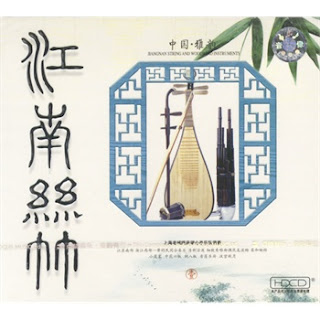
Silk and Bamboo

Shanghai, a bridge, a park, a lotus pond, a pavilion. Lovers, couples, children and the elderly stroll past, others sitting on benches. Some exchange the latest gossip or news, while others observe courtships in the making or broken hearts. The wind carries up leaves and fallen willow, marking its course as it sails across the lotus pond. A solitary bird dips its head in the water. Music as the writer Indra Sinha reminds us ‘does not all have to be with strings and bows and pipes, it can also be made by drops of rain or wind cut by a leaf.’

I could tell you that silk and bamboo music is performed on bolts of silk in a bamboo grove or music of bygone dynasties performed by lithesome maidens for the emperor’s pleasure. It is in fact music that comes from the south of the Yangtze River. It is hugely popular in Shanghai but some of the repertory is staple for conservatory-trained musicians around the country. Silk refers to the string instruments that once had silk strings and the bamboo mostly flutes. The music includes percussion instruments, usually played by one musician holding a wooden clapper in his left hand and a drumstick in his right.

This afternoon I’m listening to silk and bamboo performed by a group of men in a pavilion. This is not a concert hall so there are no obligatory silences before or during a piece. Tables are full of tourists, Chinese and foreign, tea attendants running around filling pots of green tea. A piece ends and some of the musicians leave their places while others take their places. Above the constant chatter of voices, I hear the leading instruments, the bamboo flute and two-string spiked fiddle playing florid ornamented melodic lines, at times together, at times anticipated or delayed.

The homogeneous blend of instruments has a striking polyphonic texture with a strong harmonic feeling in the cadences even though I know that its musical architecture has no harmonic foundation. Its embroidered musical textures are what musicologists call heterophony. 'Hetero' means 'other' or 'different' and 'phony,' 'sound.' The texture present in many types of Chinese music, vocal and instrumental, has 'different sounds' or 'different voices,' but it would be more correct to say that there are different instruments performing the same tune at the same time. There are also heterophonic relationships between voice and accompaniment found in regional opera genres as well as Peking opera.

Heterophony in Chinese literally means 'branch-sound polyphony,' and it is often explained as Lawrence Witzleben points out, as 'resembling small branches of a river that continually diverge from the mainstream then return to it.' The branching tributaries analogy is pretty much what goes on when musicians decorate or ornament a melody, 'adding flowers' as it is described in Chinese, then bringing their oars back to join the other rowers. The ornamentations are never the same, and there are variations among performers.

I have always been fascinated by the changes that happen from one rendition to the next that are accepted within the tradition. More difficult to pin down, however, is trying to understand how the physical and mental state of the performer—that is—emotions ranging from happy sad to anxious and indifferent—influence the subtle execution of 'flowers.'

Any explanation will not be simple. Connections between music and mood are so idiosyncratic to make any explanation unsatisfactory. It’s a bit like asking a chef what he added to a dish that has transformed it into a dazzling culinary experience. I have not infrequently spoken to bamboo flute performers in the bamboo and silk tradition after a rendition of a piece and said: ‘I really like the way you added flowers in that piece', which is another way of saying, 'I really liked the way you added melodic ornamentations and used neighbouring passing pitches to create momentary deviation.' Whether it is a chef or a musician, what is made different or changes with each dish or the rendition of piece of music has become thoroughly internalized through years of practice. The intuitive stuff is never easy to pass on.

Variation is such an integral part of silk and bamboo music that transcriptions and published scores need to be handled with care,especially when so much of the spirit and nuances of the music are initially transmitted between teacher and student. The adding of flowers is what brings the tradition to life. It starts in a practice room with a notated score and teacher and incrementally blossoms into intuitive variation.

References:

Lawrence
Witzleben  Silk and Banboo in Shanghai: The Jiangnan Sizhu Instrumental Ensemble Tradition, Kent: Kent State University Press, 1995:106. 

Thursday, 16 December 2010

Membrane Flute Mystery

At some point in Chinese music history, the idea of boring a hole on a flute between the blow hole and the six finger holes and covering the hole with a membrane became aesthetically valued and desirable. Enter the dizi, a transverse bamboo flute. It’s been around for centuries in China, but we still don’t have ay idea exactly when and where the membrane started.

One of the crumbs of evidence is found in Chapter 148 of a music treatise by Chen Yang, a scholar and theoretician of the northern Song dynasty (960-1127 C.E). This treatise was presented to the throne in 1104. We find reference to an instrument called the seven-star pipe and its maker Liu Xi.

During a trip to Shenyang in China’s northeast province of Liaoning in January 1993, I was able to read the chapter in question, a Qing dynasty handwritten copy housed in the Special Repository Section at the provincial library. There was only threadbare information about the instrument and Liu Xi. While Liu is attributed to single-handedly inventing the instrument, the fact remains that dubious and rather murky figure does not appear in any of the standard musical dictionaries or encyclopedias. Nor do we have the foggiest idea of where Liu was born or when he died.

Chen’s reference suggests to me that he merely recorded what was considered by the northern Song—and by others much earlier—as the popular or accepted account surroundings the origins of the instrument like Hermes in Greek mythology is attributed to inventing a tortoise-shell lyre. If Liu was the brainchild of a membrane flute during the Tang dynasty why is it mentioned some two hundred years after it was allegedly created? Is it possible that musicians and instrument makers at the Jiaofang, a performing arts academy established during the reign of the Tang Emperor Gaozu (r.618-626 C.E.) knew of a membrane flute like the seven-star pipe, but turned a deaf ear to its tone quality because it was not aesthetically pleasing? If so, what does this tell us about Chinese concepts of musical aesthetics during the early Tang?

I have always wanted to turn this organological mystery into a story with a hard-nosed sleuth around the early Tang dynasty and Southeast Asia as the setting. A young Chinese detective from China is called in to solve the membrane mystery and in the course of his investigations finds himself caught in a web of murder and international intrigue. But that would certainly be crossing the lines of fact and fiction.

Let me explain what we do have. We do have our aforementioned textual reference—Chen Yang’s music treatise, and we do know there are other membrane hole flutes found in parts of southeast Asia which cropped up around the sixth century and earlier. The taegum, for instance, a large transverse flute from Korea, was one of the three major flutes of the Unified Silla Period (688-935 C.E.), and an important instrument in folk and court traditions and many shaman ensembles. The instrument has six fingerholes and corresponds in structure to two other flutes of the Silla Period, the medium-sized chunggum and sorgum. Unlike the membrane on the dizi, the membrane on the taegum is protected by a metal plate 'laced to the instrument with leather thongs.'

We can also map membrane-hole flutes from Vietnam, the transverse cai on dic, the internal-duct vertical flute cai sao, and from China the wenbeng from southwest Yunnan province, the tongxiao of the Korean nationality in Jilin and Heilongjiang provinces in China’s northeast China and the limbe found across regions of Mongolia, and Qinghai in China’s northwest. In Okinawa, there is also a membrane-hole transverse flute which is known under at least four names.

There are also flutes found in East Asia that have membranes not applied to cover a hole but are exposed. The zhumoguan found among the Dong in China is an end-blown flute with no fingerholes. A strip of bamboo one-sixth the length of the pipe is cut and scraped away to expose a bamboo membrane. Among the indigenous aboriginal peoples of Taiwan, the modi similar to the zhumoguan among the Dong in China in that it also has an exposed membrane, is used by hunters to lure and capture wild deer.

Our organological map highlights cultural diffusion, migrating populations, artifacts, customs, ideas, techniques, political factors and so on. The tributary system which began as early as the Han dynasty in China played a crucial role in cultural diffusion as it was soon adopted by neighbouring countries like Japan, Korea, Burma and Thailand. We know that when the Japanese decided not to send any more envoys and missions to China in 894 C.E, the membrane had not become and indelible feature of transverse flutes used in court music in the imperial capital in Chang’an (present-day Xi’an).

The mystery hinges on one major question: Did the membrane originate independently in China around the sixth century or was it introduced to China from one of its southeast neighbours or among its ethnic peoples? Several Chinese musical instruments came to China via its northwestern border like the pipa, konghou and huqin, but what of a membrane-hole flute? There are no examples of such flutes found in Central Asia or India, and such a lead, while worthy of further investigation is in my view, highly dubious.

The rest is speculation until we have more tangible leads. And there will be many broken tiles to complete this mosaic puzzle.

Tuesday, 7 December 2010

Rockin’ the Stage

On a hot summer’s evening on March 1990 a large group of students gathered outside the Eastern Lake Hotel in Wuhan demanding to see their rock idol Cui Jian. The hotel had once been a regular haunt and secluded meeting place for some of China’s most famous Party luminaries. Now it had another star. As Cui Jian sat in his hotel room, exhausted after performing to a capacity crowd at the Hongshan Sports Stadium, the stifling heat suffocated the city.

Cui Jian was the defiant pin-up boy who exploits were acted out not in the Jade Emperor’s peach garden or among the denizens of a deep like the Monkey King, but at venues in Beijing and across the country. He was the guy who triggered off rock music in the mid eighties or at least launched rockets to propel the movement further.

Rock was an animal that didn’t exist at the time. The West had done it, or it had up to date done so in an orderly fashion since the 1950s. It was now time for China. Cui Jian’s ‘I Have Nothing’ came out in 1986 and the rest, as they say, was history. Bands started appearing like birds released from their cages, voices that had been locked up far too long and wanting to be free: China Power, Brother, White Angel, Fly, Toto, Da, Da, Da, Acupuncture, and 43 Baojia Street, the home of the Central Conservatory of Music. I don’t call them imitators; Chinese rockers delighted in subverting the genre and making their own.

Some rockers were professional musicians like the band 43 Baojia Street, transferring their skills to Western instruments. Cui Jian had played the trumpet since he was a kid and had also played with the Central Symphony Orchestra. Cui, I imagine was bored shitless just playing trumpet and like many of his music friends was ready for change.

A torrential downpour of popular music genres from the West rained down on China’s youth thanks to what today might seem like antiquated technology, the humble cassette tape. Foreign expats, tourists, businesspeople, Chinese returning home all played their part in getting the music to China. It was now up to cassette tape recorders and the airways to disseminate it.

In 1986 in the provincial city of Shenyang in northeast China, Lionel Richie was crooning ‘Hello’ through speakers in a park that was the burial grounds of a Manchu emperor and his empress. I have no idea how the park authorities got hold of a Lionel Richie tape, but a foreign student at Liaoning University had apparently met someone who worked at the park and had passed on a copy of the song. It was also at the same time that China’s economy was getting ready for a growing consumer market and record companies in Hong Kong and Taiwan saw the enormous potential for popular music, including rock that would return them profit and prestige.

Rock music has always worn the 'anti-badge', but no matter how we want to talk of rock music’s deviance—the bad boy or bad girl—it’s still part of what it projects to beat up or move away from. Rock music in China obviously created a space for alternative voices like anywhere, but live public performances of rock music have always been 'sensitive,' especially if you were someone like Cui Jian. One summer’s evening in a jazz bar in Beijing, the authorities decided to gag the rock icon: he could play the trumpet but not sing.

More than once I have found myself in a run-down warehouse in the capital listening to rock and grunge bands finely alchemizing the technique, the group precision. These are musicians who spend many hours a day honing their musical craft. They practice, they rehearse, knowing full well that there are little if any financial rewards. But that doesn't hold them back. There's a collective raw energy that binds them, a devotion not to persuade an audience and a larger community of spirits but to connect. Timothy Rice’s influential model of ‘how do people historically construct, socially maintain and individually create and experience music’ is equally valid here in these warehouses as any other music.

Many years ago I went to a punk rock concert in the capital with an American businessman who had an extensive vocabulary of Beijing’s foul language. The lead vocalist was the punk-rocker He Yong. Going around my head after the concert were words from his song ‘Garbage Dump’:

This world we live in is like a garbage dump

The people are like insects.

Everyone’s struggling and stealing

We eat our conscience

And shit ideology.

During the performance of the song I was watching all the other non-verbal phenomena going on stage and the interaction between the audience and the band. The audience helped shaped the song expressing their own opinions with shouts and applause, punctuated all the while by pulsating rhythms, electric guitar distortions and all the other bits and pieces suggested by the instruments.

It was pouring outside, the sound of rain lashing against a long line of parked cars. I was lucky to get a taxi. The driver was playing a CD of the Taiwanese pop star Teresa Teng. I was now light years away, musically, from what I had experienced that evening. I had moved across the popular music grid as effortlessly as Clark Kent darts into a phone booth and comes out as Superman.